
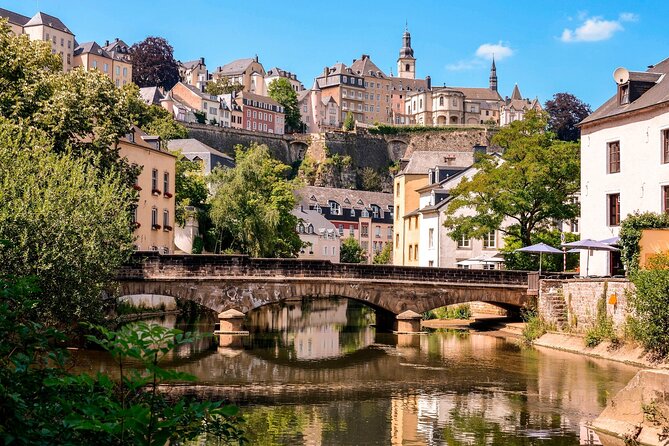
Review · ESCAPE GAMES & SCAVENGER HUNTS
Luxembourg City Romantic Game: Walking Tour & Scavenger Hunt
A city walk that feels like a date, but solves puzzles. This independent game turns major landmarks into clue stops, with 13 story-based puzzles you can do at your own pace. I like that you can start anytime, pause, and finish later, without needing to herd a group. One thing to consider, though, is that the experience is app-led rather than guide-led, so it may feel less personal than you expect.
If you want a low-pressure way to get your bearings, you’ll like this setup: mobile ticket, offline-friendly quest play, and a route that threads Ville Haute and Grund for river views. The other big plus is the variety of stops, from major monuments like the Gëlle Fra to scenic ramparts like the Corniche. The main drawback to keep in mind is execution style, some people find the story and directions a bit clunky, especially in tough weather or if GPS misroutes you.
In This Review
- Quick things to know before you play
- Why Luxembourg City works so well for a game walk
- Price and what $7.20 buys you in real value
- Where you start, how long it takes, and your best time window
- Chapter-by-chapter route: what each landmark adds to the hunt
- Pont Adolphe, your clue kickoff and first scenic hit
- Gëlle Fra, the Golden Lady of remembrance
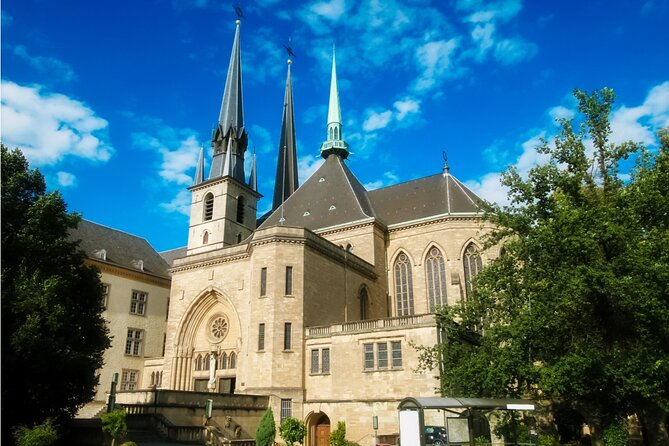
- Notre-Dame Cathedral, the city’s only cathedral
- Place d’Armes, parade-ground energy in the old town
- Jan Pallach Square, poets, steel industry symbolism, and a motto
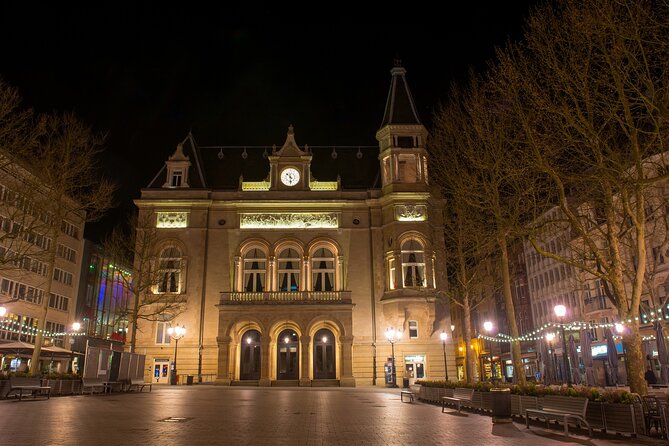
- Place Guillaume II, Knuedler, and the city hall vibe
- Clairefontaine Square and the “Heeschefraa” Charlotte statue
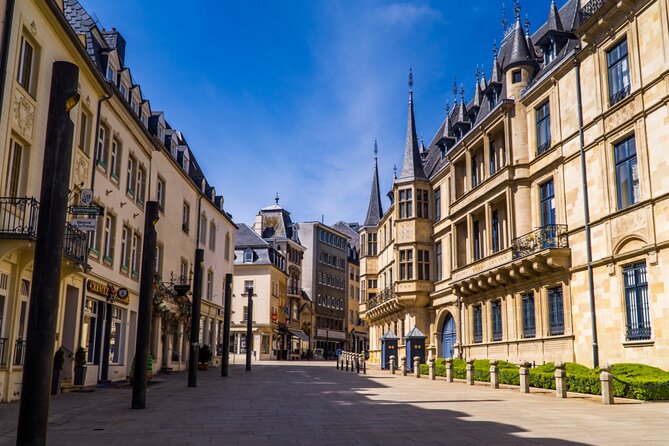
- Grand Ducal Palace, the official seat of power
- A historic church site with Romanesque, Gothic, and Baroque elements
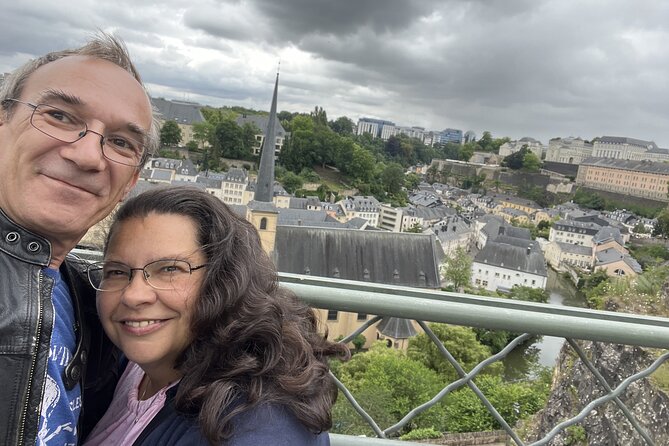
- The Corniche, the balcony views that feel postcard-true
- A popular restaurant stop for a quick reset
- Melusine, folklore, and the House of Luxembourg connection
- Finish above the Alzette River, a final bridge and a wrap-up
- The app experience: puzzles, offline play, and story style trade-offs
- Navigation and route sanity checks in Luxembourg City
- Who should book this Luxembourg City romantic game
- Should you book it? My practical take
- FAQ
- What is the price per person?
- How long does the Luxembourg City game take?
- Is the experience in English?
- Do I need a live tour guide?
- Can I start the quest whenever I want?
- Where do I meet and where does it end?
- Is it possible to play offline?
- Can I get a full refund if I cancel?
Quick things to know before you play
- Self-paced, start-when-you-want quest with 24/7 access to the game via mobile app
- 13 puzzles over about 3.5 km, with a mix of history and location-based questions
- English only, and it’s designed as an outdoor activity with no contact needed
- Big-picture sights plus viewpoints, including Alzette River panoramas from the Corniche
- Private group format, so you’re not waiting around for strangers
- No live tour guide, so you rely on the app and your phone navigation
More puzzles played across the streets:
- e-Scavenger hunt Luxembourg: Explore the city at your own pace
★ 4.0 · 17 reviews - Discover Luxembourg by playing! Escape game – The alchemist
★ 3.5 · 6 reviews - Luxembourg Scavenger Hunt and Highlights Self-Guided Tour
★ 4.0 · 4 reviews
Why Luxembourg City works so well for a game walk
Luxembourg City is compact, photogenic, and built for wandering. You can walk from grand squares to steep ramparts in a short distance, and the viewpoints are frequent. That makes this kind of scavenger hunt work. Instead of “tour bus in motion,” you get a series of mini missions where the city itself is the answer key.
I also like the “romantic game” angle, because it changes the vibe. The fun is in looking closely, scanning street-level details, and working out what the next clue is asking. You get that slow travel feeling without spending hours planning route turns or trying to decode a map in one go. And since it’s private and no contact required, the experience stays relaxed, even with friends or a class trip.
One practical note: because it’s puzzle-based and app-led, your phone becomes your compass. If you’re the type who gets annoyed when your phone battery drops, bring a charger or a power bank. If you’re fine with that, you’ll probably enjoy the pacing a lot more than a fixed guided walk.
Price and what $7.20 buys you in real value
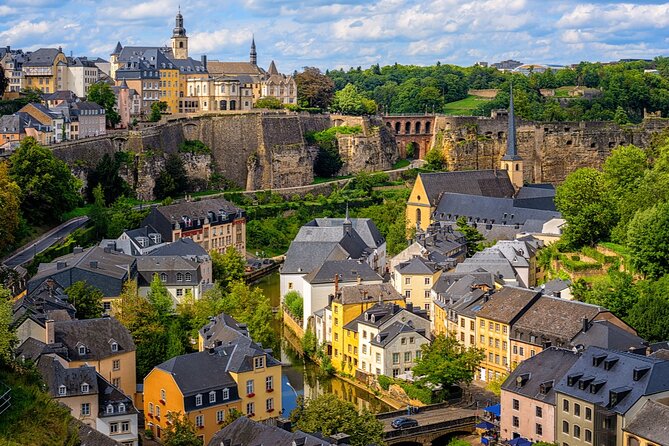
At $7.20 per person, this is positioned as a budget-friendly way to cover a lot of the city in about 1 hour to 1 hour 30 minutes. That price matters because it changes the math. Instead of paying for a long, structured guided tour, you’re paying for a self-led story engine that gives you focus as you explore.
Here’s where the value shows up:
- Lifetime access to the quest via the mobile app means you can replay it later or continue if you pause mid-walk.
- 24/7 access lets you time it around your day, not the tour schedule.
- 13 puzzles across the route make it more than just “walk to the next landmark and read a sign.”
Now the honest trade-off. You’re not getting a live guide. No one is tailoring explanations on the spot, and you won’t be able to ask questions. If you love deep, conversational history delivered by a person, you may feel something is missing. But if your goal is to cover key sights, learn as you go, and keep things flexible, the low price can feel like a smart deal.
Where you start, how long it takes, and your best time window
You’ll start at Pont Adolphe, 1116 Ville Haute, Luxembourg, and you’ll end at 48 Montee de Clausen, 1343 Grund, Luxembourg.
The route is listed as about 3.5 km, but plan for real life. In heavy rain or if you double-check directions, you may walk extra. A good rule: treat the “time estimate” as a range, not a promise. If you take photos, slow down for views, or need to regroup after a wrong turn, your walk can stretch beyond the baseline.
Timing wise, the access window is broad. The listed opening hours are 5:00 AM to 9:00 PM, and the app access is described as 24/7 start-and-resume. That’s useful in Luxembourg City because daylight quality matters for the Corniche and Alzette River views. Morning can feel quiet and crisp. Late afternoon gives nicer light for photos, especially around ramparts.
If you want the smoothest flow, I’d aim for daytime visibility. It’s an outdoor walk with clue stops, and spotting details is easier when you can read the surroundings clearly.
More of Luxembourg City done at walking pace:
- Tip-Based Luxembourg Walking Tour in English★ 4.5 · 146 reviews
- Luxembourg city walking and wine tasting tour★ 5.0 · 122 reviews
- Luxembourg City Cultural Walking Tour★ 5.0 · 95 reviews
- Luxembourg city walking tour★ 5.0 · 81 reviews
Chapter-by-chapter route: what each landmark adds to the hunt
This game is built around a sequence of story moments and questions. At each location, you look around to find the answer and move forward. Think of it like a self-guided “choose your own pace” tour, where you stop because the city asks you to.
Pont Adolphe, your clue kickoff and first scenic hit
You begin at Pont Adolphe, a standout bridge in Ville Haute. The game starts here by sending you searching for a detail connected to a cafe story. Even before you reach the big monuments, you’re getting practice for the hunt style: read the prompt, scan the immediate area, and spot what the question is pointing at.
Practical tip: start with your phone held steady and your brightness up. Early on, you want a quick win, because it sets the rhythm for the rest of the walk.
Gëlle Fra, the Golden Lady of remembrance
Next comes the Monument of Remembrance, commonly called the Gëlle Fra. It’s a war memorial honoring Luxembourgers who volunteered for service in the armed forces of the Allied Powers during both World Wars and the Korean War. The puzzle here pushes you to look closely and connect the monument with its story, not just pass by it for a photo.
This stop is valuable because it anchors the city’s modern identity. You get a moment of seriousness inside a game format, which keeps the walking tour from becoming purely sightseeing.
Notre-Dame Cathedral, the city’s only cathedral
Then you reach Notre-Dame Cathedral, described as Luxembourg City’s only cathedral. The site traces to a Jesuit church, with a cornerstone laid in 1613. In the game, you’ll again search around for an answer before moving on.
I like that the cathedral is treated like a clue rather than a passive photo stop. It encourages you to notice details you might otherwise ignore. If you’re walking with someone who usually rushes museums, this style can slow both of you down in a good way.
Place d’Armes, parade-ground energy in the old town
At Place d’Armes, the game keeps you in the center of the old city action. This square has historically served as a parade ground for troops defending the city. Today it draws locals and visitors, especially in summer months.
For you, it works as a reset. You’re between heavier monuments and more viewpoint-driven sections, so a wide open square helps your brain recalibrate. It’s also a good place to check your map and confirm you’re lined up for the next leg.
Jan Pallach Square, poets, steel industry symbolism, and a motto
The next monument focuses on two national poets: Dicks (1823-1891) and Michel Lentz (1820-1893). The description includes a lion at the top, the heraldic animal of the Grand Duchy, and a blacksmith figure representing the steel industry.
The pillar also includes the motto: Mir wëlle bleiwe wat mir sin (we want to remain what we are).
This is one of the stops where the “romantic game” label makes sense in a different way. It’s not just romance. It’s identity. By turning the monument into a clue, you get language and symbolism you’ll remember long after the walk ends.
Place Guillaume II, Knuedler, and the city hall vibe
At Place Guillaume II, you’ll see the equestrian statue to former Grand Duke William II and the Luxembourg City Hall on the western side. The square is also colloquially known as Knuedler, tied to the idea of a knot in a belt worn by Franciscan friars.
The app has you look around for the next answer, and the placement is smart here. In a square like this, you can rotate your body, scan inscriptions and architecture, and solve the puzzle without feeling boxed in.
Clairefontaine Square and the “Heeschefraa” Charlotte statue
The monument to Grand Duchess Charlotte sits on Clairefontaine Square. In the vernacular, it’s nicknamed Heeschefraa, described as a gesture that could be interpreted as a begging hand.
The statue is shown wrapped in a wide cloak, with a palm turned to the sky in a greeting-like motion. When a story question ties into how people interpret the gesture, you naturally start looking beyond the silhouette.
For me, this is a good “human scale” stop in a walk that otherwise leans monumental.
Grand Ducal Palace, the official seat of power
Next is the Grand Ducal Palace, the official residence of the Grand Duke of Luxembourg. The building’s history includes being the city hall from 1572 to 1795, then a prefecture seat in 1795, and later headquarters of the Luxembourg government in 1817.
This is a strong stop because it gives you perspective on how the city functions today. You’re not only viewing heritage, you’re looking at where governance lives.
In a game format, the best part is that you’re not rushed past. You pause, look around, and treat the palace as a puzzle subject, which helps it feel less like a barrier and more like a place with layers.
A historic church site with Romanesque, Gothic, and Baroque elements
After the palace, you’ll reach a church described as the oldest holy building in the city, on a site that replaced a castle chapel associated with the Counts of Luxembourg in 987. The structure was destroyed and reconstructed over the centuries, and the current appearance is traced to 1688, with restorations in the 1960s and 1980s. The description notes a mix of Romanesque, Gothic, and Baroque architecture.
Even without the name spelled out in the details you provided, this stop is still meaningful. Mixed-style churches often look like they belong to different eras, and that makes them great for clue-based noticing. The game pushes you to look at the building’s features instead of treating it as a background landmark.
The Corniche, the balcony views that feel postcard-true
Now you get the view section: the Corniche, described as the most beautiful balcony of Europe, attributed to Luxembourg writer Batty Weber. The Corniche runs along the Alzette valley on ramparts built by the Spaniards and the French in the 17th century, stretching from the Bock Promontory up to the lower part of the Holy Ghost Citadel (the Rondellen).
This is where the game earns its keep. It’s not just about distance. It’s about payoff: you move through the walk and then the city opens up into panorama. The description also notes that earlier staircases on steeper parts were leveled after the fortress dismantling, and the protecting wall sections were cleared to reveal views over Grund and the Rham Plateau.
If you’re doing this on a clear day, don’t rush. Pause during the clues, look down at the river, and take a few photos with your feet planted. That’s the moment that makes the whole scavenger hunt feel worth it.
A popular restaurant stop for a quick reset
The route also includes a pause at a popular restaurant in Luxembourg City, described as having over four-star reviews on Tripadvisor. The app uses it as a checkpoint where you look around and continue your story thread.
I’d treat this as your chance to drink water and refuel mentally. Even if you do not plan to buy anything, it’s a good moment to gather yourself before the myth and finale.
Melusine, folklore, and the House of Luxembourg connection
Then comes Melusine, a figure from European folklore and mythology, described as a female spirit connected to freshwater. In the legends, Melusine is often depicted as a woman with a serpent or fish body from the waist down, similar to a mermaid.
This stop also ties Melusine to medieval dynasties, including tales that the House of Luxembourg and other noble lines are descendants in folk stories and literature. In a game format, that matters because you’re not just reading a myth. You’re turning it into an answer connected to what you see around you.
If you like quirky stories, this is one of the more memorable chapters.
Finish above the Alzette River, a final bridge and a wrap-up
The tour ends on a bridge above the Alzette River, matching the endpoint around 48 Montee de Clausen in Grund. Finishing on water and height gives you a satisfying visual end point. It also helps you feel like you’ve crossed between districts, not only progressed between stops.
If you want one last souvenir moment, linger for a few minutes. Take in where you started in Ville Haute, and notice how different the city feels from this side of the river.
The app experience: puzzles, offline play, and story style trade-offs
The game includes 13 story-based puzzles and a narrative at each stop. It’s meant to be offline to avoid using up your data, and you’ll access everything through the mobile app. You also get lifetime access after you buy, which is handy if you want to revisit the city later.
That said, be aware of a nuance. The quest is designed for offline play, but navigation sometimes still depends on phone mapping tools. So if you want zero data use, plan ahead: download offline map data on your phone before you start. At minimum, make sure your battery is healthy.
Story tone is another trade-off. One criticism is that the story and visuals can feel too automated, especially early on. The counterpoint is that other players find the questions genuinely fun and informative, and that the clues help you see corners of the city you’d miss on a straight walk. Your best bet is to approach this like an interactive city game, not a substitute for a human guide.
If it’s raining, expect slower clue spotting and more cautious walking. One person described the experience as tricky in heavy rain, but still doable. If weather is rough, move slower and assume you’ll take longer than the baseline time.
Navigation and route sanity checks in Luxembourg City
Luxembourg City’s streets can be confusing even when you’re looking at a map, and GPS can misbehave in hilly areas and near structures. One practical issue that can happen is routing you under a bridge when you should be on it. That doesn’t ruin the walk, but it can lead to wasted time.
Here’s how I’d keep yourself on track:
- Match the next clue location with what you see on the ground, not just the arrow.
- If you think you’re wrong, stop and correct early, rather than “powering through.”
- Use street signs and obvious landmarks like squares and bridges as anchors.
Also, be ready for the walking distance to vary. The route is described as about 3.5 km, but your actual total might be longer if you backtrack or take detours while solving puzzles.
A helpful mindset: think of it as a guided walk for your attention, not a guaranteed route that never deviates.
Who should book this Luxembourg City romantic game
This is a great fit if you want:
- A self-guided, low-stress way to cover major sights in a short time
- A fun, clue-based format that helps you focus on what you’re seeing
- A walk that works for couples, friends, and small groups where you don’t want to wait on strangers
- A way to explore Ville Haute plus Grund, including the Corniche viewpoints
It may be less ideal if you strongly prefer:
- A live, talkative guide who can explain history and answer questions
- Deep, detailed storytelling with a human voice as the main event
- A navigation experience you can ignore, because you will be using your phone to complete clue-to-clue movement
Should you book it? My practical take
Book this if you want value, flexibility, and a playful structure that helps you see Luxembourg City up close. The mix of major monuments and panoramic ramparts gives you a good variety in a relatively short time, and the price makes it easy to justify.
Skip it or temper expectations if you know you dislike app-led storytelling or if you want a human guide to steer the experience. If you choose to play anyway, go in with the right mindset: you’re here for puzzles, casual learning, and that Alzette River payoff at the end.
FAQ
What is the price per person?
The price is $7.20 per person.
How long does the Luxembourg City game take?
It takes about 1 hour to 1 hour 30 minutes.
Is the experience in English?
Yes, it is offered in English.
Do I need a live tour guide?
No. It is a private outdoor activity with no live tour guide.
Can I start the quest whenever I want?
You have 24/7 access and can start anytime and pause and resume freely. The listed opening hours for the activity are Monday to Sunday from 5:00 AM to 9:00 PM.
Where do I meet and where does it end?
Start at Pont Adolphe, 1116 Ville Haute, Luxembourg. End at 48 Montee de Clausen, 1343 Grund, Luxembourg.
Is it possible to play offline?
The quest is described as playable offline to avoid using up your data, and it’s accessed through a mobile app.
Can I get a full refund if I cancel?
Free cancellation is available, and you can cancel up to 24 hours in advance for a full refund.
Recently added, in and around Luxembourg City



Escape Games & Scavenger Hunts, compared.
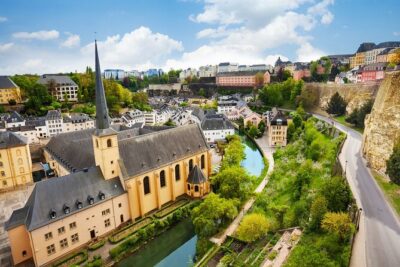
e-Scavenger hunt Luxembourg: Explore the city at your own pace
Read our review →
Discover Luxembourg by playing! Escape game – The alchemist
Read our review →Luxembourg Scavenger Hunt and Highlights Self-Guided Tour
Read our review →Escape Game Outdoor The Walking Dead in Luxembourg
Read our review →
Luxembourg Challenges EVG EVJF City Challenge team
Read our review →
Discover the secrets of Luxembourg while playing! Escape room
Read our review →
Unusual track game on Christmas markets in Luxembourg
Read our review →Browse the lists this tour appears in