
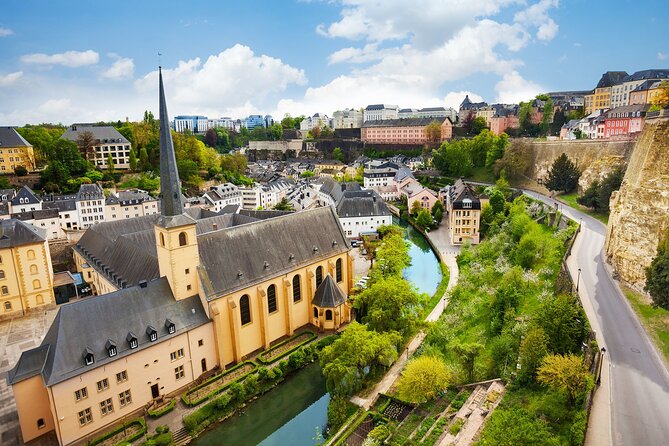
Review · ESCAPE GAMES & SCAVENGER HUNTS
e-Scavenger hunt Luxembourg: Explore the city at your own pace
You can explore Luxembourg at your speed.
An e-Scavenger hunt turns a walk into a game, using your phone and a set of photo-and-knowledge assignments around some of the city’s best spots. I especially like that the starting point is easy to find and that you can keep it relaxed or make it more competitive with your group.
What I like just as much is the team size. With a maximum group of six players, you can actually work together on the clues without it turning into a slow moving conga line. The main thing to watch is time, since this kind of city trail can stretch toward the upper end of the estimated window, especially if you pause for views and photos.
In This Review
- Key highlights that make this hunt work
- How the e-Scavenger hunt plays in Luxembourg City
- Starting and ending at Place d’Armes, a walking loop you can manage
- Notre-Dame Cathedral: a Jesuit-founded starting clue
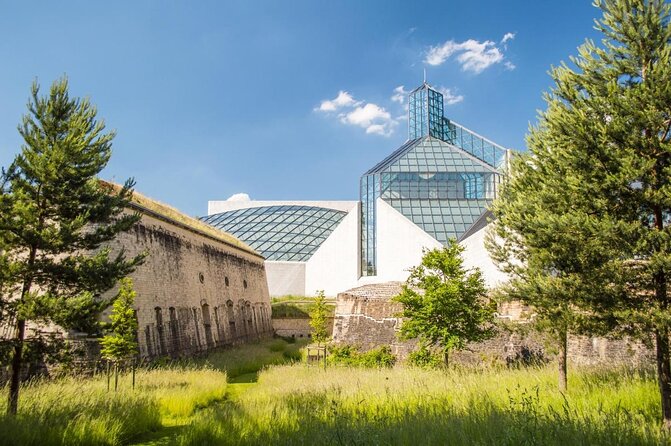
- Plateau du Rham and the fortress mindset across the city
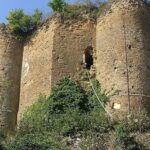
- The hollow tooth ruin above the Bock Casemates
- Bock Casemates: underground defenses and a major visitor site
- Chemin de la Corniche: the balcony view stop you’ll remember
- Adolphe Bridge and the early-1900s era of Grand Duke Adolphe
- City hall, government power, and the squares around it
- Railway station area and the connection between movement and city life
- Grund and MUDAM: medieval charm and modern art on the same route
- Pfaffenthal panoramic lift and the National Museum stop by the Palace
- Price and value for a group of up to six
- Tips so your team actually enjoys the hunt
- Should you book the e-Scavenger hunt in Luxembourg City?
- FAQ
- How many people can join this e-Scavenger hunt?
- How long should I plan for the tour?
- Do I need a smartphone and data?
- Where does the hunt start and end?
- Is the hunt offered in English?
- Is free cancellation available?
Key highlights that make this hunt work
- Pick-your-pace gameplay: choose how competitive you want to be, and adjust effort on the fly
- A smart team size: designed for up to 6 players so everyone stays involved
- Built around real landmarks: Jesuit origins at Notre-Dame, fortress sites, city government, and viewpoints
- Route flexibility: you can choose your own route or skip far locations, with a trail length around 4-7 km depending on what you keep
- A loop you can trust: it starts at Pl. d’Armes and ends back at the same meeting point
- Phone-based ticket and app: a mobile ticket plus an online app, in English
More puzzles played across the streets:
- Luxembourg City Romantic Game: Walking Tour & Scavenger Hunt
★ 4.0 · 82 reviews - Discover Luxembourg by playing! Escape game – The alchemist
★ 3.5 · 6 reviews - Luxembourg Scavenger Hunt and Highlights Self-Guided Tour
★ 4.0 · 4 reviews
How the e-Scavenger hunt plays in Luxembourg City
This is a self-guided scavenger hunt delivered through an online app on your phone, with a mobile ticket included. Instead of following a rigid script, you solve assignments tied to specific places. In other words, you get structure without the stress of keeping up with a guide.
You’ll see the big advantage immediately if you like to linger. Luxembourg is steep and broken into levels, so pausing to enjoy a view does not ruin the day. The hunt is built for a walking loop, and the gameplay lets you move at whatever rhythm your group can handle.
The game is also designed with groups of friends or family in mind. With up to six players, you can split tasks, argue over answers, and still regroup easily at each stop. I find that sweet spot is what makes these hunts feel social instead of chaotic.
Starting and ending at Place d’Armes, a walking loop you can manage

Your trail begins at 9 Pl. d’Armes, 1136 Ville-Haute Luxembourg, and it ends back at the same meeting point. That matters more than you might think. You are not guessing how to get home after you finish, and you do not have to keep scanning maps for the next transfer.
The schedule is generous too. It runs every day, with listed hours of 12:00 AM to 11:59 PM during the availability window shown. Practically, that means you can fit it into lunch, afternoon, or early evening timing.
The tour is also private for your group only. So if you are traveling with kids, friends, or coworkers, you are not dealing with a mixed crowd and a guide pacing everyone. Add that it is near public transportation, and it’s easy to combine with other plans in the city.
Notre-Dame Cathedral: a Jesuit-founded starting clue
One of the first landmark stops is Notre-Dame Cathedral of Luxembourg, founded between 1613 and 1621 by the Jesuits. Even if you are not the type to memorize dates, this is a great kind of opener. It gives you a historical anchor early, so the rest of the route feels connected, not random.
If you like quick context, this stop is your friend. It also helps set the mood for how Luxembourg got shaped by powers bigger than the city itself. You’re about to walk through fortress ideas, underground defenses, and government buildings. A Jesuit origin story is a clean way to begin.
A practical tip: treat this as a quick read-and-look moment. You don’t need a long sit-down here to get value from the hunt, and you’ll want your energy for the viewpoints later.
More ways round Luxembourg City in one go:
- Luxembourg city walking and wine tasting tour★ 5.0 · 122 reviews
- Luxembourg City Cultural Walking Tour★ 5.0 · 95 reviews
- The Best of Luxembourg City Guided E-bike Tour★ 5.0 · 90 reviews
- Luxembourg city walking tour★ 5.0 · 81 reviews
Plateau du Rham and the fortress mindset across the city
Next up is the Plateau du Rham, opposite the city, which served military purposes during Luxembourg’s history as a fortress. This is one of those stops that makes the geography click. Luxembourg isn’t just pretty streets on a postcard. It’s a city built around elevation, defense, and control of the approaches.
For your hunt, the payoff is how this kind of assignment changes the way you see the terrain. A view stop is nice. A fortress-terrain stop makes you look twice at what is in front of you and what is below.
If your group tends to power through, slow down for one minute and scan the skyline and slopes. This is the sort of place where a small pause gives you way more than another clue solved quickly.
The hollow tooth ruin above the Bock Casemates
You’ll also come across the ancient ruin known in English as The hollow tooth, which marks the city’s entrance or beginning and is situated above the Bock Casemates. That naming alone makes it memorable, and it also helps you understand why the underground sites matter.
The value here is location and layering. The trail is pushing you to see Luxembourg as stacked time periods: the entrance point, the defensive tunnels, and the city that grew around them. Even if you are not reading every detail, the route naturally encourages pattern spotting.
If you like ruins, this is a good stop to take seriously for photos. If you’re not into ruins, don’t worry. The hunt format keeps you moving, and this still functions as a strong “aha” moment for the city layout.
Bock Casemates: underground defenses and a major visitor site
The trail then hits the Bock Casemates, described as a subterranean defense system made up of kilometres of tunnels and now one of Luxembourg’s most important visitor sites. This is the part of the route where the city’s fortress past becomes physical.
Even without going deep into any single tunnel experience, the idea is clear. You are looking at proof that Luxembourg was designed for defense, not just for comfort. That viewpoint makes the rest of your walking stops feel less like a list and more like a story.
Here’s the practical consideration: tunnels can make a self-guided plan feel slower, especially if you stop for extra reading or photos. If your group is sensitive to long indoor waits or low-light spaces, plan to skim and keep moving rather than getting stuck. The route flexibility is your safety valve.
Chemin de la Corniche: the balcony view stop you’ll remember

The Chemin de la Corniche is a promenade locals and tourists call the most beautiful balcony in Europe. Translation: you are going to want a moment here. The trail is worth it partly because it gives you time at a viewpoint that feels built for lingering.
This is also a good place to make the hunt fun instead of stressful. If your app assignments involve answering and moving on quickly, let that go for a bit. Take a slow walk, swap teams, and use the scene as your reward for solving the previous clue.
If you’re traveling with someone who wants fewer “brainy” moments, this promenade is the perfect compromise stop. The views do the work.
Adolphe Bridge and the early-1900s era of Grand Duke Adolphe
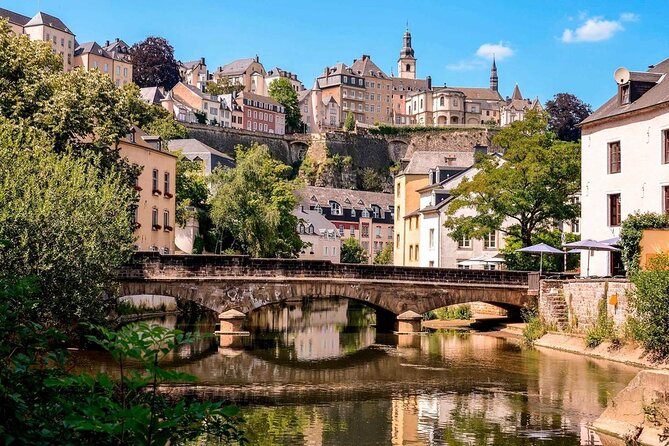
You’ll also reach Adolphe Bridge, also called the New Bridge, erected between 1900 and 1903 during the rule of Grand Duke Adolphe. It’s the kind of landmark that balances usefulness and beauty, since a bridge is both an engineering statement and a walking route for people.
In the flow of the hunt, it helps round out the fortress theme with a modernization theme. Luxembourg didn’t just defend itself underground. It built connections above ground too.
One practical angle: bridges can be windy and exposed. If your group tends to rush, slow down and do a quick check for comfortable spots to pause with your phone, read the assignment, and then keep walking.
City hall, government power, and the squares around it
The route includes Hôtel de ville de Luxembourg, the city hall of Luxembourg City. It is also described as the center of local government, including being used as the private office of the Mayor of Luxembourg City. That makes it an ideal stop for a hunt format, because it’s clearly a civic “anchor” that fits naturally into a game.
From there, you’ll be moving through key squares like Place d’Armes and Constitution Square. Constitution Square was built up on the ancient Beck bastion (noted with dates 1644 and 1685), and the monument Gëlle Fra was set up there in 1923.
These stops are valuable for two reasons. First, squares help you orient in the city, so the walking loop feels easier. Second, monuments and buildings give you concrete reference points for everything else you see, especially around fortress-era sites.
If you prefer a quick visit style, treat squares like checkpoints: read, solve, look, and move. If you like atmosphere, linger longer because the entire area is made for it.
Railway station area and the connection between movement and city life
A stop on your trail is the quarter in central Luxembourg City where, since 1859, Luxembourg’s principal railway station and terminus have been located.
This matters because it shifts the hunt away from the defensive story and into the city’s modern heartbeat: travel, arrivals, and daily movement. It also gives you a contrast to the underground casemates. You go from tunnels to platforms without ever leaving the same overall loop.
If your group is planning to connect to trains later, this is an easy point to remember. Even if you do not change plans, the location can help you feel more confident navigating the city after the hunt ends.
Grund and MUDAM: medieval charm and modern art on the same route
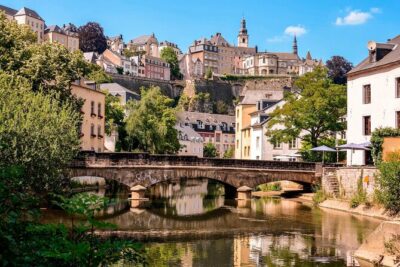
In the medieval part of the city, you’ll visit Grund, known for nice authentic buildings, restaurants, and bars. Even in a scavenger hunt, this is a smart type of stop because it’s sensory. You get street-level charm, not just stone and dates.
Later, the route includes Musée d’Art Moderne Grand-Duc Jean (MUDAM) on Kirchberg, outside the center. It’s described as having an art collection of international standing and opening in the summer of 2006.
This pairing is one of the better balancing acts in a walking trail. Grund gives you older Luxembourg textures, while MUDAM signals how the city also invests in international culture. If you’re the type who likes variety, this section is your reward.
Practical consideration: Kirchberg is outside the center, so if you’re time-crunched, you can use the route flexibility to skip or shorten parts. If you keep it all, you’ll see how Luxembourg’s modern and medieval sides talk to each other.
Pfaffenthal panoramic lift and the National Museum stop by the Palace
You’ll also pass through the area around the Pfaffenthal panoramic lift, a public lift connecting Ville Haute and the district of Pfaffenthal below. Even if you just use it as a landmark for your assignment, it’s a reminder that Luxembourg handles elevation with practical infrastructure, not just stairs.
Finally, the trail includes Musée National d’Histoire et d’Art, described as being in the heart of the city between the Palace and the Bock Casemates. It offers you thematic tours, which can work nicely after you’ve already learned the city layout through your scavenger clues.
If you are a museum person, this stop can feel satisfying, because you’re not just reading about history at sights. You’re given a museum context too. If you are not, treat it as a marker and decide on the spot how much time you want to spend.
Price and value for a group of up to six
The price is $37.33 per group, up to 6 people. That makes the per-person cost low if you actually fill the group. At six people, the math is roughly a bit over $6 each, which is strong value for a structured walking activity that stays flexible.
This is also the kind of experience where the “value” is not only the sightseeing. It’s the way you learn, because you’re solving assignments tied to what you see. That tends to stick better than passive wandering, especially in a city where many landmarks are close enough to connect by foot.
Where the value can drop is if you are traveling with only one or two people. Then you’re paying the group price for fewer participants. Still, if you like self-guided games, it can still be a good choice, especially because it ends back at the start and keeps logistics simple.
Tips so your team actually enjoys the hunt
A few things help this kind of city trail feel smooth rather than fiddly.
First, bring a phone you are comfortable using for apps. A key note is that a smartphone and data are not included, so plan ahead. If your battery runs low mid-route, it’s harder to enjoy the experience at your pace.
Second, wear walking shoes. Your route links multiple areas and includes a mix of city streets, viewpoints, and sites like the Bock Casemates area. This is not a sit-and-sip tour.
Third, decide your strategy early. If your group wants an easy win, you can keep the effort lower. If you want competitive energy, push each other on assignments. And if someone in the group is dragging, you can skip far locations since the trail supports route flexibility.
Fourth, build time buffers. The experience is listed as about 2 to 4 hours. If you move fast, you might finish closer to the shorter end. If your group is doing extra photos, views, and museum-style stopping, plan closer to the longer end.
Should you book the e-Scavenger hunt in Luxembourg City?
I’d book this if you want a fun, low-pressure way to see Luxembourg City’s big themes: religious origins at Notre-Dame, fortress-era geography at Plateau du Rham and Bock Casemates, standout viewpoints on Chemin de la Corniche, and the civic anchors of city hall and the squares.
I’d hesitate if your schedule is tight and you cannot tolerate delays, because the trail can easily run toward the upper time range for groups that stop often. It can also be less ideal for travelers who hate using apps on their own devices, since you will need your phone and data.
If you’re in the “we want to do something active but not overly formal” camp, this one is a solid fit. You get structure, you get flexibility, and you get the kind of route where Luxembourg starts to make sense in real time.
FAQ
How many people can join this e-Scavenger hunt?
This experience is designed for a team of up to 6 people.
How long should I plan for the tour?
The duration is listed as approximately 2 to 4 hours.
Do I need a smartphone and data?
Yes. A smartphone and data are not included, but you do get an online app to play the game on your phone and a mobile ticket.
Where does the hunt start and end?
It starts at 9 Pl. d’Armes, 1136 Ville-Haute Luxembourg, and it ends back at the meeting point.
Is the hunt offered in English?
Yes. The experience is offered in English.
Is free cancellation available?
Yes. You can cancel for a full refund up to 24 hours before the experience’s start time. After that, refunds are not available.
Recently added, in and around Luxembourg City



Escape Games & Scavenger Hunts, compared.
Luxembourg City Romantic Game: Walking Tour & Scavenger Hunt
Read our review →
Discover Luxembourg by playing! Escape game – The alchemist
Read our review →Luxembourg Scavenger Hunt and Highlights Self-Guided Tour
Read our review →Escape Game Outdoor The Walking Dead in Luxembourg
Read our review →
Luxembourg Challenges EVG EVJF City Challenge team
Read our review →
Discover the secrets of Luxembourg while playing! Escape room
Read our review →
Unusual track game on Christmas markets in Luxembourg
Read our review →Browse the lists this tour appears in