
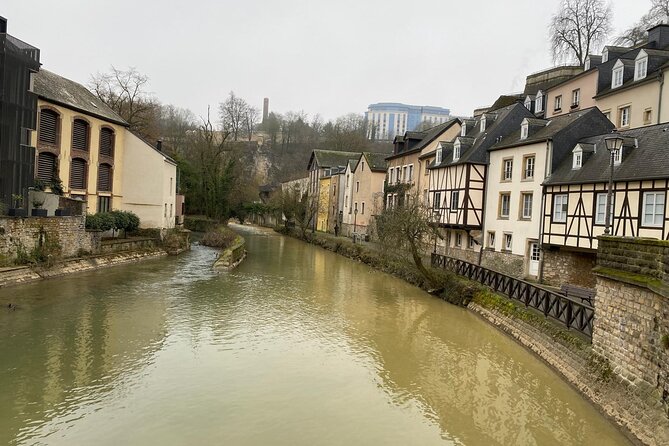
Review · HISTORICAL TOURS
Luxembourg Self Guided Heritage Walking Tour with Mobile App
Statues, churches, and chocolate in one walk. This self-guided route uses a mobile app to explain what you’re looking at across Luxembourg City, with offline audio and images to help you find each stop. You also get the freedom to pause when you want and keep moving when you do not.
I especially like the offline access and repeat listening, because you can download once, then use it later without hunting for signal. I also like the way the story threads through major sights and smaller details, like the Napoleon connections and the Melusina legend.
One heads-up: you depend on your phone and the emailed tour code, and GPS can be a bit hit-or-miss, so plan to use the in-app map and on-screen stop identifiers rather than only the blue dot.
In This Review
- Quick highlights for a smooth self-guided Luxembourg walk
- Getting your bearings in Luxembourg City: Jan Palach to Parcs de la Pétrusse
- Price and value: why this app tour is cheap, and when it might feel expensive
- The app experience: offline audio, a mobile ticket, and the map that keeps you on track
- Stop by stop: what you’ll learn at each landmark (and what to look for)
- Square Jan Palach area and the Dicks and Lentz statue story
- Napoleon Bonaparte connections: where the city nods at empire
- William Square and Napoleon: a square with a bigger mission
- Luxembourg’s chocolate house stop: pause, taste, then return to the story
- St. Michel’s Church and the French Revolution: what changed, what survived
- A fortress stop, called the Gibraltar of the North
- Melusina statue: the story linked to early coffee traders and modern brands
- Neumunster Abbey and the hidden skeleton secret
- Chemin de la Corniche: the most beautiful balcony in Europe
- The Grand Duches statue: what the architect is trying to say
- The Cathedral: architecture style and facade design interpretation
- Logistics that actually matter: phone setup, headphones, and timing windows
- Who this walk suits best (and who might want a different approach)
- Should you book this Luxembourg self-guided heritage walk?
- FAQ
- How long is the Luxembourg Self Guided Heritage Walking Tour?
- Where does the tour start and end?
- What language is the tour offered in?
- What do I need to take with me?
- Does the tour work offline?
- How do I access the tour on my phone?
- Are there any limits on fitness or walking comfort?
- Is there a cancellation window?
Quick highlights for a smooth self-guided Luxembourg walk
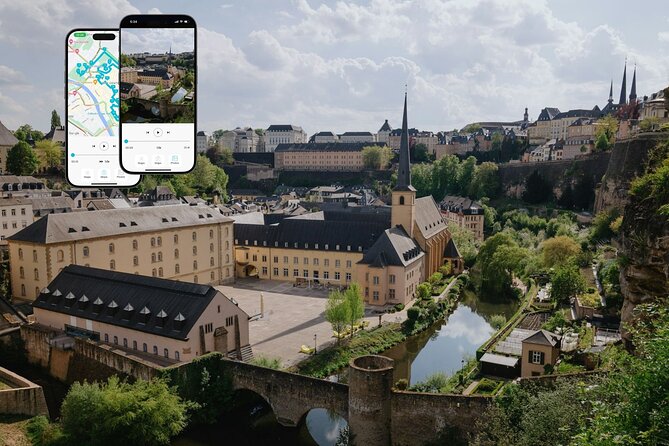
- Offline audio, written guide, and images help you keep going even with spotty cell service
- A clear landmark storyline ties sculptures, squares, churches, and forts into one route
- Napoleon shows up more than once, so you’ll start recognizing patterns in the city faster
- Melusina and coffee-trader lore gives you something playful to look for while you’re sightseeing
- Neumunster Abbey’s skeleton story turns a quiet site into a memorable stop
- Chemin de la Corniche is built for lingering, with dramatic city views along the way
More of Luxembourg City done at walking pace:
- Tip-Based Luxembourg Walking Tour in English
★ 4.5 · 146 reviews - Luxembourg city walking and wine tasting tour
★ 5.0 · 122 reviews - Luxembourg City Cultural Walking Tour
★ 5.0 · 95 reviews
Getting your bearings in Luxembourg City: Jan Palach to Parcs de la Pétrusse
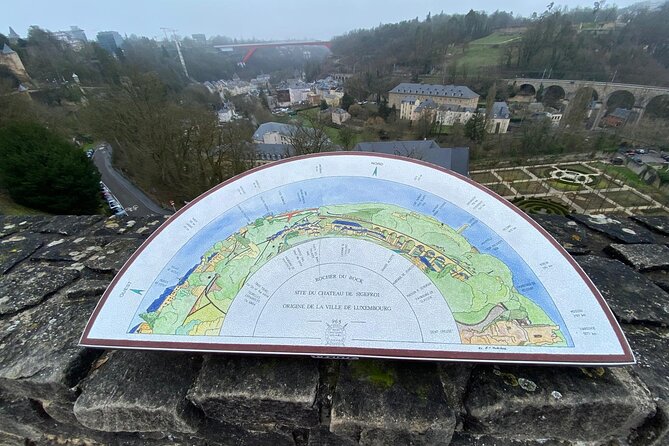
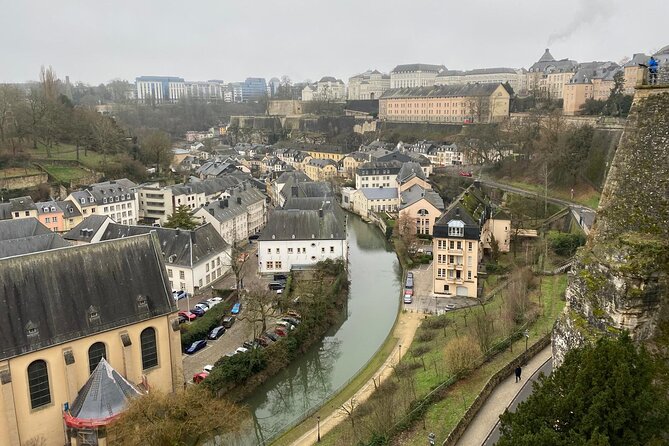
This walk starts at Square Jan Palach (in Uewerstad) and ends in the Parcs de la Pétrusse area by Rue de la Semois, in Oberstadt. That start-to-finish flow matters, because most of the points of interest you’ll be hearing about sit on the city’s slopes and viewpoints. If you treat it like a random wander, you’ll end up zigzagging. If you treat it like a line, it clicks.
The route is described as about 1 to 2 hours. In real life, that range can stretch if you stop for photos, read more slowly, or linger at viewpoints like Chemin de la Corniche. One practical tip: if you want the full effect, plan for a half-day vibe anyway. You can always speed up, but you cannot easily “add time” later if you feel rushed.
The tour is designed for moderate physical fitness and is a walking route across historic streets and viewpoints. Wear real walking shoes. Luxembourg City has a reputation for stairs and slopes, and the app does not magically remove the effort.
Price and value: why this app tour is cheap, and when it might feel expensive
At $7.84 per person, this is priced like a value-packed city activity, not a premium guided day. You are paying mainly for the app, which includes audio and a written guide, plus images for identifying stops and an interactive map for navigation. You also get mobile ticket access and offline access once downloaded.
So when does it feel worth it? When you:
- want to see the “big names” plus the “why” behind them
- prefer control over pacing, meaning you can pause and move on your schedule
- will actually listen to the audio more than once, since you get 1-year access
When might it feel like a bad deal? If your phone battery dies, you forget the tour code from your email, or GPS sends you off target and you spend time correcting it. This is still one of the best ways to get context for the price in Luxembourg, but only if your tech setup is ready.
The app experience: offline audio, a mobile ticket, and the map that keeps you on track
This is not a headset-and-human guide situation. You get AI-generated audio and written narration, plus the interactive map and stop images. You also get offline access after downloading the tour, which is a big deal in older city centers where reception can bounce around.
Two things make this kind of self-guided tour work smoothly:
- You treat the app like navigation, not like decoration. When you see the next stop marker, follow the in-app direction.
- You use the stop photos to confirm you are at the right place, especially for statues and smaller points that look similar from different angles.
A caution from real-world use: GPS can point you slightly wrong at times, including near sculptural stops. If that happens, don’t fight it by ignoring the app entirely. Instead, switch to the in-app map and image prompts so you can visually verify the exact location.
Also, do not wait until the last minute. Before you start walking, check your inbox for the email from Tourific with access instructions, including the tour code. If you arrive at the start and that code is missing, you can lose a chunk of your time getting sorted.
More of what built Luxembourg City into a fortress:
- Schengen Wine Heritage and Beaufort Castle Private Tour★ 5.0 · 3 reviews
- From Iron to Wealth, Luxembourg Steel and Mining Heritage★ 5.0 · 2 reviews
- Luxembourg: Nature, History and Castles Full-Day Tour★ 4.5 · 529 reviews
Stop by stop: what you’ll learn at each landmark (and what to look for)
Below is the story flow you’ll follow, with practical “what to notice” notes so the stops land with meaning, not just sightseeing checkmarks.
Square Jan Palach area and the Dicks and Lentz statue story
The early part of the route introduces you to Dicks and Lentz, and why it took almost seven years to unveil the statue after completion. That time gap is one of those small details that instantly makes you look closer. Instead of seeing a statue as a decorative object, you start wondering what delayed it and what message the artists and city wanted to get across.
Architectural intent matters here. Listen to the audio and then stand back for a moment. Look at proportions, positioning, and how the statue fits into the square. The app’s explanation is built to make you interpret the sculptural choices, not just read a caption.
Napoleon Bonaparte connections: where the city nods at empire
Soon after, you’ll connect the artwork and public spaces to Napoleon Bonaparte. You do not have to be an expert on Napoleon to enjoy this. The payoff is recognizing how Luxembourg City references larger European history through local monuments and squares.
As you walk, try to spot repeated design cues or themes. The tour’s structure nudges you to connect dots between stops, which makes the city feel less like isolated attractions and more like a planned story.
William Square and Napoleon: a square with a bigger mission
At William Square, the app connects the location back to Napoleon again. Squares often feel like “just places to pass through,” but when you hear why this one matters, you’ll likely start noticing sightlines and orientation. Look around the open space and think about how a public figure connection would be communicated in stone and layout.
Luxembourg’s chocolate house stop: pause, taste, then return to the story
You’ll reach the most popular chocolate house in Luxembourg. This is the tour’s built-in break for your senses. Even if you do not plan to buy anything, step in or at least pause outside so the stop becomes a reset before the church and fortress sections.
The app also points you toward the chef who runs the place, which is a nice reminder that heritage is not only monuments. It is also food culture, craft, and people keeping traditions going.
Practical note: if you want to make this stop efficient, check the time you’re arriving and do a quick browse. Then grab what you want and get moving again, because the viewpoints and older sites later will reward your attention.
St. Michel’s Church and the French Revolution: what changed, what survived
Next up is St. Michel’s Church, with an emphasis on its history and architecture. The big hook here is what happened during the French Revolution. That kind of “shock event” changes how you view a building. Instead of looking only at the facade or height, you start thinking about which parts were damaged, restored, or reinterpreted.
When you’re at the church, use the app’s guidance to focus on specific architectural elements. That helps you avoid the common trap: standing in front of a beautiful building but not knowing what you’re looking at.
A fortress stop, called the Gibraltar of the North
You’ll then meet one of Luxembourg’s impregnable fortresses, including why it was called the Gibraltar of the North. That nickname is vivid, and it helps you understand the city’s defensive mindset. Listen for the reason behind the comparison, then imagine the view from the fortress lines. You are not just seeing history, you are mentally mapping it onto the slope.
Practical tip: fortress areas can be exposed, so bring a light layer if the weather turns. Views from these areas often beat any museum panorama for free.
Melusina statue: the story linked to early coffee traders and modern brands
One of the most fun stops is the Melusina Statue. The tour shares the legend and its connection to early coffee traders, including a link to one of today’s modern brands. Even if you care more about mythology than business history, the story gives you a reason to look carefully at the statue’s details and pose.
This is also a stop where you can do a mini “photo circle.” Walk around to see how the statue reads from different angles. The app’s interpretation helps you catch symbolism you might otherwise miss.
Neumunster Abbey and the hidden skeleton secret
At Neumunster Abbey, you get the story behind the skeletons found there, described as a hidden secret. That kind of discovery changes how you experience a site. It turns a quiet, historical setting into something human and unsettling in the best way, because it explains why the site holds such a lasting mystery.
When you listen to the audio, focus on what the story teaches you about the time period. Even without extra facts beyond the narration, you’ll likely notice more meaning in the space around you.
Chemin de la Corniche: the most beautiful balcony in Europe
Then comes Chemin de la Corniche, often called the most beautiful balcony in Europe. This is a “slow down” stop by design. Even if you do not buy anything, you should pause and take in the view. The audio gives context, but the atmosphere is the real attraction here.
If you’re traveling in busy seasons, walk steadily and step aside when you want a clear photo. The view is the point, so avoid blocking the path while people get their own look.
The Grand Duches statue: what the architect is trying to say
Later, you pass the statue of the Grand Duches and get interpretation of what the architect wants to convey. That’s a useful shift in your brain. Instead of seeing a royal figure as a generic symbol, you’ll start thinking about design intent.
As you listen, watch for how the statue’s scale and placement relate to the surrounding buildings. The app is helping you connect form to meaning.
The Cathedral: architecture style and facade design interpretation
Finally, you learn about the Cathedral and its architecture style, with extra attention to the facade designs. This last stretch is where you’ll feel the value of hearing the “why” behind the design choices. You’ll likely start noticing patterns in carvings and how the facade guides your eye.
If you want the best ending, do not rush this stop. Let the audio finish and then spend a few minutes scanning the facade again, this time with new expectations.
Logistics that actually matter: phone setup, headphones, and timing windows
A few practical things can make or break this tour.
You need your phone and you should keep it charged. There is offline audio, but your device still needs power for the app navigation and map.
Headphones are not included, and the tour does not provide physical devices. If you want audio privacy or reduced city noise, bring your own headphones.
Opening hours are listed as Monday to Sunday, 9:00 AM to 7:00 PM, with the service window running from 06/14/2024 to 03/07/2027. In other words, you’ll want to start within that daily window.
Near public transportation is listed, which is handy for both starting at Square Jan Palach and finishing near Parcs de la Pétrusse.
And because this is self-guided with a maximum of 20 travelers, you should not expect a “big crowd management” problem. It’s more about how smoothly your app runs than about how packed the route is.
Who this walk suits best (and who might want a different approach)
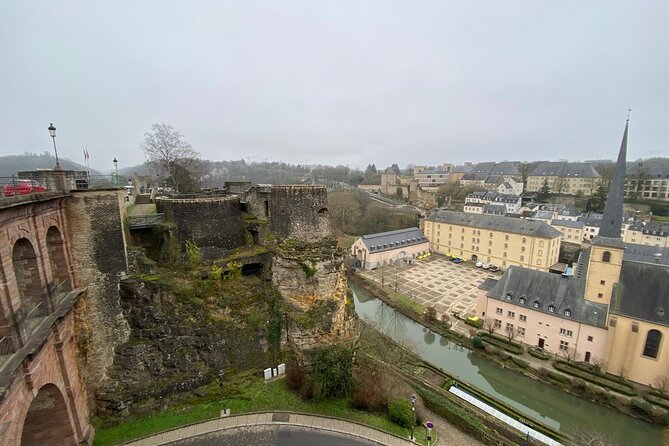
This tour works best if you:
- like planning your own pace, with built-in stories to keep you engaged
- want context for statues, churches, and city viewpoints without waiting for a group schedule
- are comfortable using a mobile app as your main guide
It might feel less ideal if:
- you strongly prefer a live guide to answer spontaneous questions
- you are traveling with limited phone battery or spotty comfort with app navigation
- you expect GPS-only guidance, because using the in-app map and stop images is part of the success here
Should you book this Luxembourg self-guided heritage walk?
Book it if you want good value storytelling in a short walking window, and you’re happy to let your phone guide your route. The strongest reasons to choose it are the offline audio, the stop-by-stop explanations that make monuments feel less random, and the fact that you can pause for viewpoints like Chemin de la Corniche.
Skip it, or be cautious, if your biggest goal is total tech simplicity. Have your tour code email ready, download the tour before you leave, and do not rely on GPS alone.
If you do that, you’ll come away with something better than photos. You’ll understand why the city put these stories in stone, and you’ll know where to look next time you walk past the same landmarks.
FAQ
How long is the Luxembourg Self Guided Heritage Walking Tour?
The tour is listed as approximately 1 to 2 hours.
Where does the tour start and end?
It starts at Square Jan Palach, 2312 Uewerstad Lëtzebuerg, Luxembourg and ends at Parcs de la Pétrusse, Rue de la Semois, 2320 Luxemburg-Oberstadt Luxembourg.
What language is the tour offered in?
The tour is offered in English.
What do I need to take with me?
You should have a mobile device to use the app. Physical devices or headphones are not included.
Does the tour work offline?
Yes. Once downloaded, it includes offline access so you can listen without internet connection.
How do I access the tour on my phone?
You’ll check your inbox for an email from Tourific with tour access instructions, including what you need to start the tour in the app.
Are there any limits on fitness or walking comfort?
The tour notes a moderate physical fitness level, so be prepared for a walking route with some effort.
Is there a cancellation window?
Yes. Free cancellation is available up to 24 hours in advance of the experience start time for a full refund.
More Luxembourg City Walks with Nobody Waiting on You
- Luxembourg Scavenger Hunt and Highlights Self-Guided Tour★ 4.0 · 4 reviews
- Luxembourg City Self Guided Audio Experience★ 3.0 · 1 review
- Luxembourg: City Bus Tour with Audio Guide and Headphones★ 4.3 · 579 reviews
Recently added, in and around Luxembourg City




Historical Tours, compared.


Schengen Wine Heritage and Beaufort Castle Private Tour
Read our review →
From Iron to Wealth, Luxembourg Steel and Mining Heritage
Read our review →Browse the lists this tour appears in