Review · TICKETS
Luxembourg City: Pétrusse Casemates Entry Ticket
Underground history in Luxembourg, without the long trek. The Pétrusse Casemates ticket takes you down into fortification tunnels where you can follow layers of Spanish, Austrian, and French influence, then connect it all to what the site did during major conflicts. I especially like the way the experience mixes reading, listening, and seeing, plus a short film that keeps the story moving.
The only real drawback is the physical reality: you descend 242 steps into the park valley behind Place de la Constitution, so it is not the choice for claustrophobia or for anyone with mobility or heart concerns.
In This Review
- Key highlights you should care about
- Pétrusse Casemates in 35 Minutes: What You Actually Get
- Finding the Entrance near the Gëlle Fraa, then Going Down 242 Steps
- What the Underground Tunnels Reveal: From 17th Century Fortifications to WWII Shelters
- Spanish, Austrian, French, and the Logic of a Defended City
- Battery de la Pétrusse: Where the Defense Story Becomes Visible
- Self-Guided Pace, Short Film, and Why Audio Can Matter
- Practical Tips That Make the Casemates Easier (and Less Stressful)
- Is the $21 Ticket Good Value for Pétrusse Casemates?
- Should You Book This Ticket, Yes or No?
- FAQ
- Where is the meeting point?
- How long does the Pétrusse Casemates visit take?
- What is included with the entry ticket?
- Do I get a film during the visit?
- How many steps are involved?
- Are pets allowed inside?
- What kind of footwear is not allowed?
- Is it suitable for people with claustrophobia or heart problems?
- Can I cancel if my plans change?
Key highlights you should care about
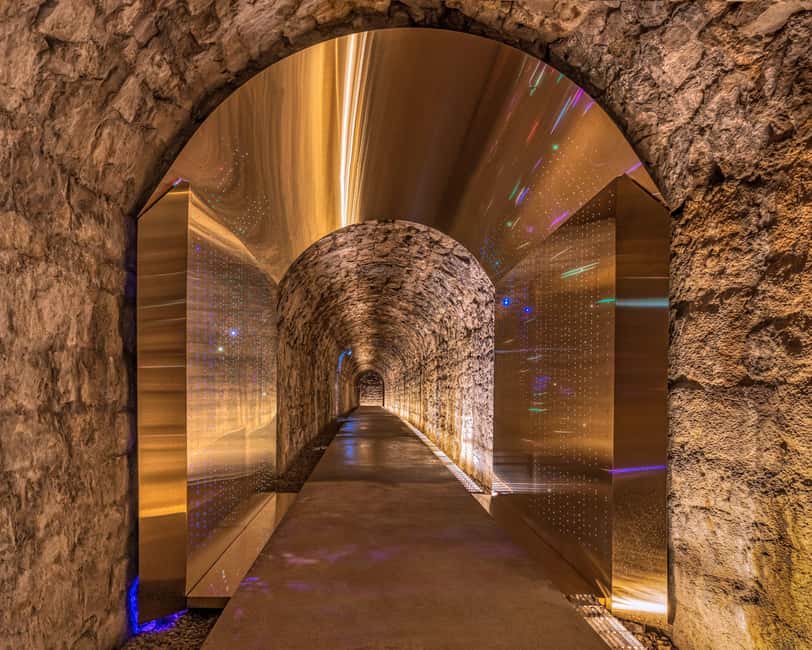
- A 5-minute film that frames what you are about to see in the underground spaces
- Spanish, Austrian, and French influence on the fortifications, not just one straight timeline
- World War shelter use, plus earlier construction dating to the 17th century
- The Batterie de la Pétrusse area, where the defense story gets concrete
- A flexible pace, either on your own or with a guide, so you can spend more time where you want
- A mix of former uses you might not expect, from shooting ranges to mushroom farms and even beer-related events
More Luxembourg admissions bought ahead:
- Luxembourg: Mudam Contemporary Art Museum Entry Ticket
★ 4.1 · 106 reviews - Luxembourg: Combi-Ticket City Train & the 7 Museums Pass
★ 4.3 · 56 reviews - Mudam Luxembourg Museum Entrance Ticket
★ 3.5 · 71 reviews
Pétrusse Casemates in 35 Minutes: What You Actually Get
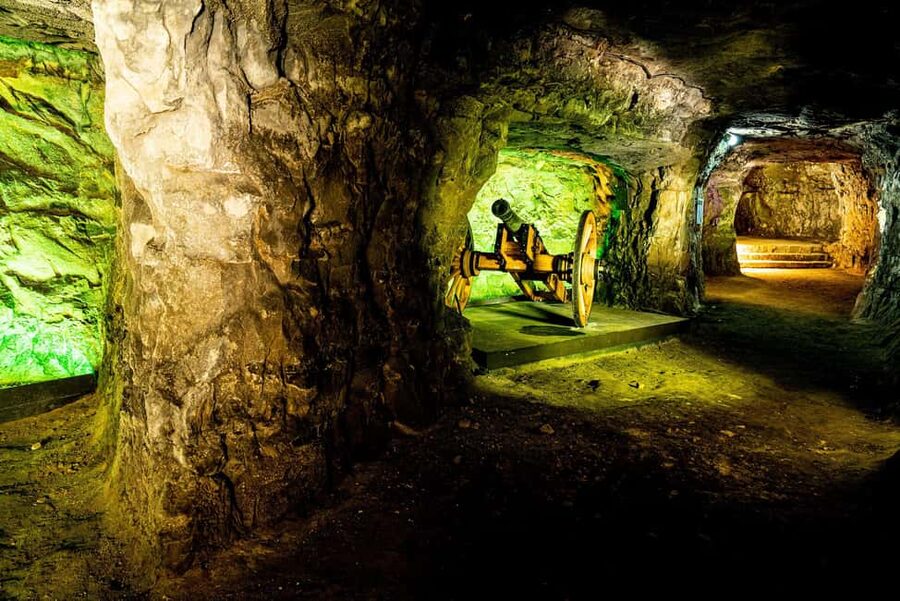
This is a short visit with a strong payoff. You buy an entry ticket to access the Pétrusse Casemates in Luxembourg City, and the total time is listed at 35 minutes, which fits well if you want one focused stop between city landmarks.
Inside, the experience is built around turning a big, confusing place into a clear story. You get historical information as you go, and there is also a 5-minute film that sets the scene. I like this format because it reduces the mental load. You are not stuck wondering what you are looking at, even if you are exploring by yourself.
The site itself is more than a tunnel system. The casemates began as fortifications tied to the Spanish modernization of medieval defenses, then they evolved. Over the centuries, they were used for different purposes, including sheltering during both world wars. The location is also tied to UNESCO World Heritage status, so you are visiting a defended landscape, not just a themed attraction.
One smart detail: you are exploring at your own pace alone or with a guide. That means you can slow down if a section feels technical and you want to read everything, or speed up if you just want the core story and the main features.
Finding the Entrance near the Gëlle Fraa, then Going Down 242 Steps
Your starting point is easy to miss if you do not know what to look for. Meet at the area around the Gëlle Fraa, Luxembourg’s golden lady. From there, you are headed into the green valley/parc area behind Place de la Constitution.
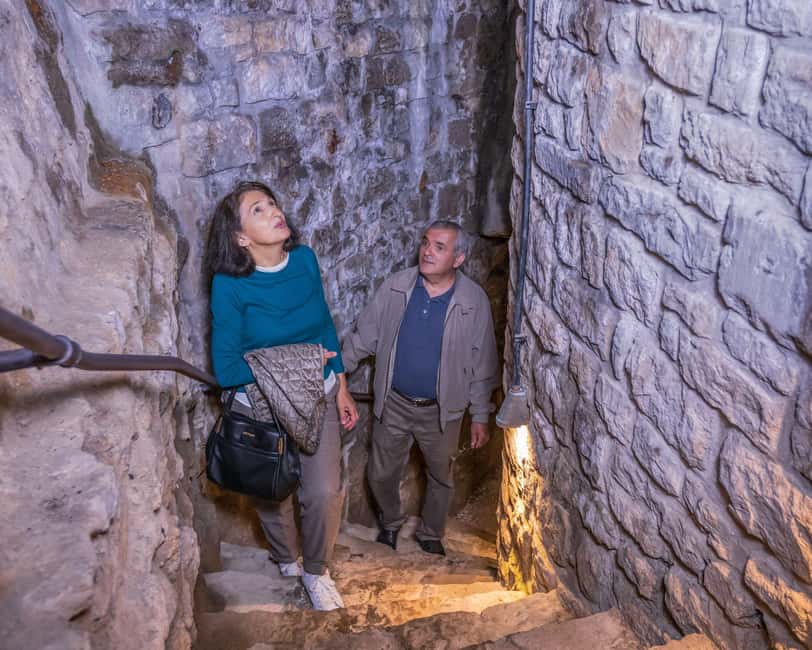
Then comes the main physical factor of the experience: 242 steps. This is not “a few stairs.” It is a real descent, and it is part of why this visit is so compact in time. You go down, you see what matters, and you come through again with your legs doing a chunk of the work.
Wear closed, practical shoes. High-heeled shoes, sandals, and flip-flops are not allowed. If you treat the casemates like an indoor museum with uneven surfaces, you will be more comfortable. Also, keep your bag situation simple because large bags are not allowed, and oversize luggage is also out.
If you are traveling with kids, the rules are strict. Baby strollers, baby carriages, and other mobility items like bikes are not allowed inside. That does not mean you cannot visit with children, but it does mean you will be managing them without the usual “push and go” gear.
What the Underground Tunnels Reveal: From 17th Century Fortifications to WWII Shelters
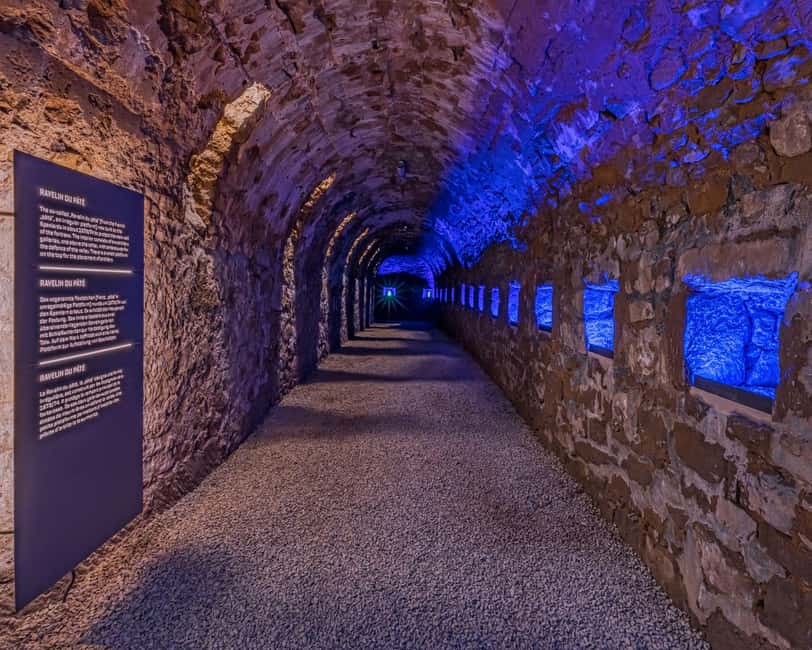
The casemates start with a descent into the underground tunnels, and that movement matters. You are not just arriving at a building, you are stepping into how a defensive city thinks: protection, concealment, and controlled access.
The casemates were first opened to the public in 1933, which tells you something useful. This place has long been set up for visitor understanding, not just for secrecy. Once you are inside, the history is presented as a timeline of how the defenses and the spaces changed over time.
A key starting point is the Spanish modernization of medieval fortifications. That gives the casemates a foundation beyond local myth. You are seeing infrastructure shaped by major European powers, and then modified again later.
As you continue through the tunnels, you learn about construction dating to the 17th century. That matters because it explains why the spaces feel built to last. These are not temporary shelters. They are engineered for defense and endurance, even if their use shifted with time.
Then you reach the section of the story that most people remember: the casemates as shelters during both world wars. You can think of it as the same underground shell, repurposed by necessity. This is where the site stops being just architecture and becomes human-scale history. You are walking through a system that offered protection when the surface world became dangerous.
More ways round Luxembourg in one go:
- Luxembourg: City Bus Tour with Audio Guide and Headphones★ 4.3 · 579 reviews
- Luxembourg City: Walking Tour with Optional Wine Tastings★ 4.9 · 422 reviews
- Luxembourg City: The Best of Guided E-Bike Tour in 3 Hours★ 4.8 · 352 reviews
- Luxembourg City: Guided Walking Tour with Cultural Insights★ 4.7 · 322 reviews
Spanish, Austrian, French, and the Logic of a Defended City
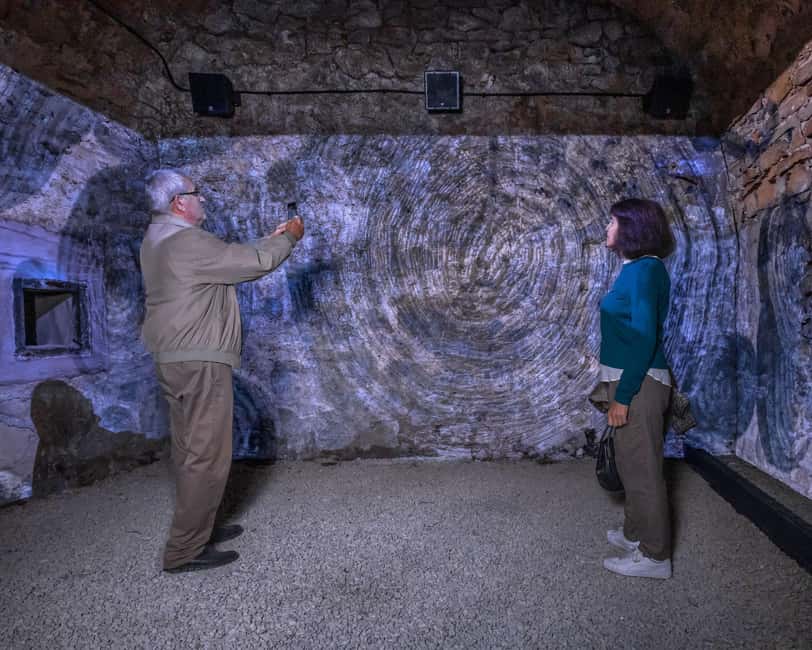
Luxembourg City’s fortification story is not one-language, one-empire, one-era. It is layered. The Pétrusse Casemates highlight the influence of Spanish, Austrian, and French powers. That is exactly the kind of detail that makes a fortification tour worth paying attention to.
You will often hear city histories simplified into a single national narrative, but this site resists that. The underground spaces show how control of the same strategic location shifted over time. Fortifications evolve when rulers change, and the casemates reflect that pattern.
As you walk, the goal is not to memorize names. It is to understand why the spaces look the way they do. When you grasp that the casemates were upgraded for defense, then later adapted for shelter and other uses, the whole route becomes easier to follow.
It also helps you connect Luxembourg City’s character above ground to what you are seeing below. This city was built to defend itself, and the casemates are part of the “how,” not just part of the “what happened.”
Battery de la Pétrusse: Where the Defense Story Becomes Visible
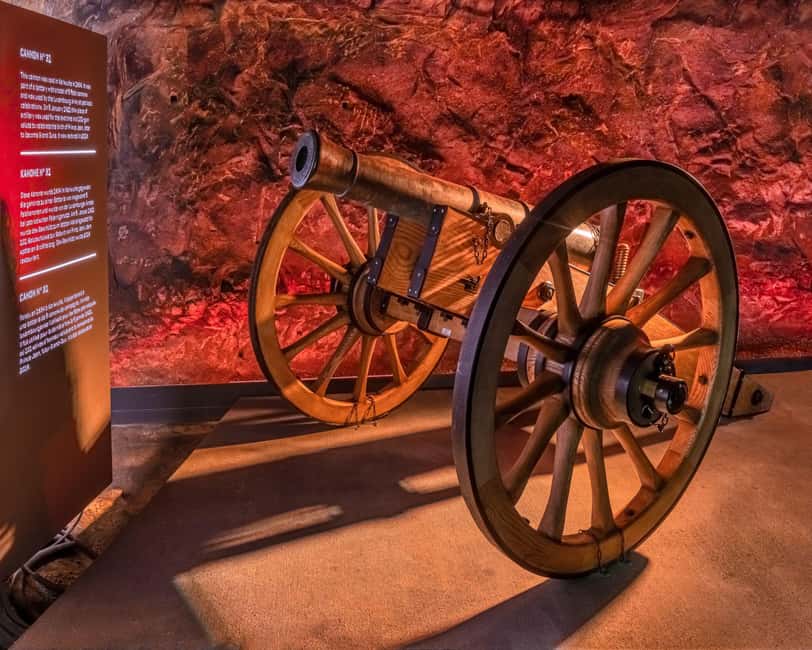
One of the most concrete highlights is the Batterie de la Pétrusse. If the rest of the route sometimes feels like “history by explanation,” this is where the defense concept gets a physical reference point.
In practical terms, you can use this stop to orient your understanding of the whole system. The casemates were built to protect and support the city’s defense. A battery area is where you start thinking in terms of positioning, fields of action, and how defenders used the geography.
From the supplied details, you also know the casemates were used for more than fighting. They served as shooting ranges, they became places for mushroom farms, and even hosted beer concert venues at different points in their long life. That range of uses is not random trivia. It shows you how a defensive underground structure can be repurposed when the threat changes.
I like when a history site makes this connection for you because it turns the underground into a living part of the city rather than a sealed-off relic. You finish the visit with a better sense of how Luxembourg City reused space across centuries.
Self-Guided Pace, Short Film, and Why Audio Can Matter
This experience is designed to work whether you have a guide or not. The information includes a short film, plus historical info along the route, and you move at your own pace.
That setup is convenient. You do not have to match someone else’s rhythm, and you can linger over the “Spanish, Austrian, French” layers if that is your kind of thing.
Still, you should know what can go right and what can go sideways. Some visitors liked the interactive mix of reading, listening, and seeing, which suggests the media is doing real work to explain the underground. But others felt the audio could be more detailed, specifically wanting more period-style sounds and more communication from the time of sieges. If you love immersive soundscapes, keep that in mind.
There is also one more practical variable: if passages are closed for maintenance, your route can be shorter. One account noted an experience around 30 minutes and only signage for direction. That is not something you can plan for, but it is a helpful expectation. If you want a more guided feeling, consider choosing a time slot that is more likely to include a guide, and go in ready to rely on the film and signs even if you do not get much live narration.
Practical Tips That Make the Casemates Easier (and Less Stressful)
Rules matter here because the underground environment is controlled. Here is what to plan around based on what is not allowed:
- No smoking
- No alcohol and drugs
- No littering
- No pets, except assistance dogs
- No bikes
- No oversize luggage or large bags
- No baby strollers or baby carriages
- No open-toed shoes, sandals, flip-flops, or high heels
- No intoxication
Those restrictions might feel strict, but they are sensible for a narrow, step-heavy underground site. If you keep your packing light, you will spend less time thinking about what you can bring.
Then there is the physical side. Since the tour includes 242 steps down and it is in enclosed tunnels, it is not suitable for wheelchair users, people with mobility impairments, people with heart problems, or those with claustrophobia. If any of those apply, it is smart to skip rather than try to push through.
Also, if you have a timing-sensitive day, remember the duration is 35 minutes. This is not an all-morning underground exploration. It is a focused visit. If you are trying to schedule it with other city stops, treat it as a “short, strong” mission.
Is the $21 Ticket Good Value for Pétrusse Casemates?
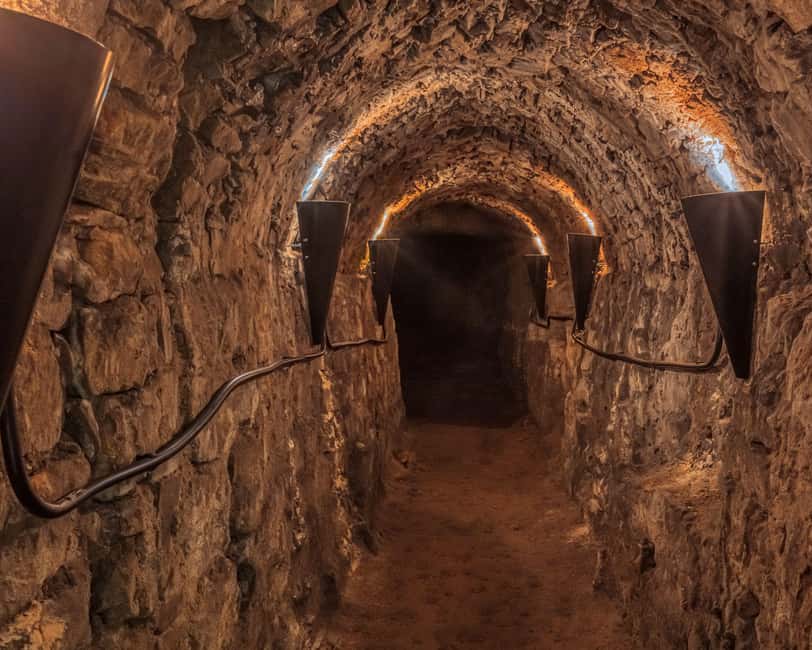
At about $21 per person for a roughly 35-minute visit, the value comes from what you are granted access to, not from how long you are there.
You get entry to the underground casemates, plus historical information and a 5-minute film. You also get a chance to see the Batterie de la Pétrusse and understand how the site evolved from early fortification design through wartime sheltering and later repurposing.
To me, the money makes sense if you want:
- A compact history stop in Luxembourg City
- Underground architecture and defense logic
- A route that explains multiple foreign influences, not one simple story
It is less of a slam dunk if you want hours of guiding, deep narration, or heavy physical comfort. This is a tunnel circuit with stairs, and the experience is short by design.
If you are picky about audio and atmosphere, you might not love the limitations. Some people wished for more audio details and period-style sounds. But if you are happy with signage plus a film and you enjoy reading while you walk, you will likely find it easier to enjoy.
Should You Book This Ticket, Yes or No?
Book the Pétrusse Casemates ticket if you are the kind of traveler who likes history that explains itself through place and structure. You will enjoy it most if you can handle stair descent, do not fear tight underground spaces, and you want a clear look at how this city defended itself across centuries. The Batterie de la Pétrusse is a satisfying anchor point, and the Spanish-Austrian-French layering is the kind of detail that makes Luxembourg feel more international than it first appears.
Skip it if you have claustrophobia, heart problems, or mobility impairments, because the 242-step descent and tunnel layout are not designed for those needs. Also, if you want a long, fully guided storytelling experience with lots of live audio, you may find the format too short and media-driven.
FAQ
Where is the meeting point?
Look for the Gëlle Fraa, Luxembourg’s golden lady.
How long does the Pétrusse Casemates visit take?
The experience is listed at 35 minutes.
What is included with the entry ticket?
Your ticket includes access to the Pétrusse Casemates, historical information about the fortifications, and a 5-minute film about the history.
Do I get a film during the visit?
Yes. There is a 5-minute film included as part of the experience.
How many steps are involved?
The underground tour involves 242 steps that lead down into the green valley or parc behind Place de la Constitution.
Are pets allowed inside?
Pets are not allowed, but assistance dogs are allowed.
What kind of footwear is not allowed?
High-heeled shoes, sandals, and flip-flops are not allowed, and open-toed shoes are not allowed.
Is it suitable for people with claustrophobia or heart problems?
No. It is not suitable for people with claustrophobia or heart problems.
Can I cancel if my plans change?
Yes. You can cancel up to 24 hours in advance for a full refund.
Would you like me to also suggest a tight 1-day Luxembourg City route that pairs well with this stop?