Review · LUXEMBOURG
Explore Luxembourg in 60 minutes with a Local
Luxembourg City makes sense fast.
This one-hour, small-group walk is built for getting your bearings quickly, with a local guide calling out what matters and pointing you toward the city’s day-to-day reality, not just postcard facts. I like that the route hits major landmarks without making you feel rushed, and you get personalized recommendations to help your next steps.
I especially like two things. First, you do the big “upper and lower city” story in one stroll, so spots like Grund and the viewpoints connect in your mind. Second, the guide doesn’t just point, they explain why things are here, including fortress history and what life looks like today. One drawback to consider: it is short and walking-based, and entry tickets for museums and monuments are not included, so you will want to budget extra if you plan to go inside.
In This Review
- Key Highlights You’ll Feel Immediately
- A One-Hour Orientation That Actually Helps You Plan
- Meet at the National Art and History Museum, Then Start Making Sense of Ville-Haute
- Museum Stop: More Than Art, a Shortcut to Luxembourg’s Story
- Fortress History Underground: The Defense Tunnels and Those Panoramic Views
- Europe’s Most Beautiful Balcony: Views Over the Alzette River
- Grand Ducal Palace: Renaissance Grandeur, Explained for Non-Experts
- Gothic Cathedral Stop: Stained Glass and the Royal Crypt
- Ending in Grund: Why the Lower City Matters
- Group Size and Guide Style: Why Up to 8 Works
- Price and Value: When 94.92 Makes Sense
- Who This Tour Fits Best
- Tips to Get the Most From Your One-Hour Walk
- Should You Book This 60-Minute Local Walk?
- FAQ
- How long is the Luxembourg City walk?
- What group size is this tour?
- Is the tour offered in English?
- Where does the tour start and end?
- What is included in the tour price?
- Are museum or monument entry tickets included?
- What is the cancellation policy?
- Is the tour suitable for guests with mobility limitations?
Key Highlights You’ll Feel Immediately
- A local-led one-hour hit list, with stops shaped to your pace and interests
- Fortress tunnels with panoramic views, so Luxembourg’s defenses actually click
- Europe’s most beautiful balcony viewpoint, for an instant Old Town and Alzette River sense
- Grand Ducal Palace exterior focus, with Renaissance architecture context
- Gothic cathedral stop, including its stained glass fame and royal crypt connection
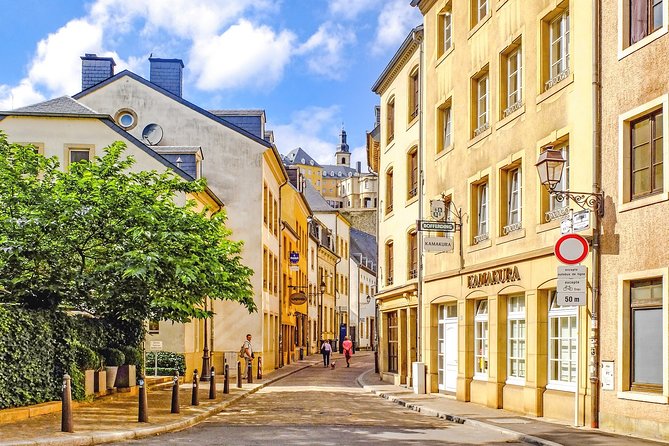
- End in Grund, so you finish where the city gets its “lower-city” charm
More Luxembourg City outings that need only an hour:
- Luxembourg: Express Walk with a Local in 60 minutes
★ 3.4 · 5 reviews
A One-Hour Orientation That Actually Helps You Plan
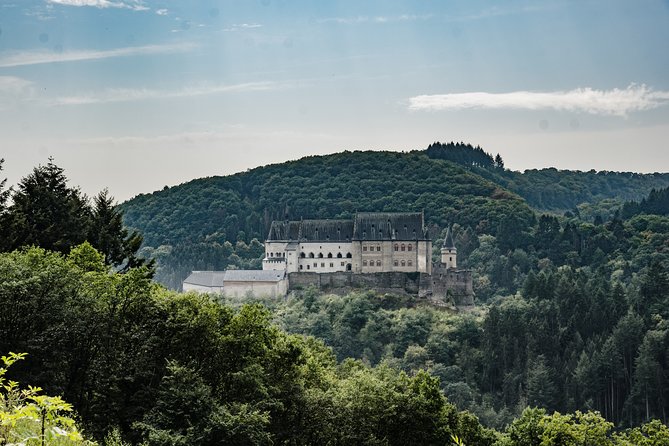
Luxembourg City can feel like it is built on angles. Hills. Valleys. Streets stacked above each other. That is why a tight, guided route works so well here. In about an hour, you will cover the kind of distances that can take you a whole day to figure out on your own, especially if you are trying to place where the sights sit relative to each other.
The best part is how the guide frames what you are seeing. This is not a lecture where you walk past everything. You get commentary that is meant to help you understand the city, then move through it with more confidence later. The small group size (up to 8) matters too, because you can actually ask follow-up questions without the group swallowing the conversation.
Do note the pace and walking time. This is not a sit-and-watch tour. You are on your feet for a good portion of the hour, and the experience is not recommended if you have impaired mobility. If you do walk comfortably, it is a smart way to start your trip.
Meet at the National Art and History Museum, Then Start Making Sense of Ville-Haute
The tour begins at the National Art & History Museum, at Marché-aux-Poissons (2345 Ville-Haute, Luxembourg City). Starting here is practical. It puts you in Ville-Haute, the upper area where so many key landmarks cluster, and it sets up the rest of the day’s geography.
Before you even reach the big viewpoints, the guide uses this first stop to help you read the city. You are shown artworks and historical artifacts, which sounds like a classic museum pitch, but it becomes more useful when your guide connects it to Luxembourg’s identity. You are not just seeing objects. You are learning how the city tells its own story.
A practical heads-up: museum entry tickets are not included. If you want to go in for longer than the tour’s stop time, you will need to pay separately.
Museum Stop: More Than Art, a Shortcut to Luxembourg’s Story
This is where the tour earns its “intro” label. The museum portion helps you understand the themes you will keep seeing outside: history, cultural identity, and the idea of Luxembourg as something shaped by both art and hard politics.
Even if you are not a “museum person,” this stop can pay off. It gives you context for why the next landmarks look the way they do, and why the city invests so much in symbolism, from architecture to public spaces. Think of it as setting the mental map before you sprint through the highlights.
What to watch for: when your guide points out specific details, take the extra two seconds to look closely at what they point at. Those quick observations are what make the rest of the walking route feel coherent.
Half an hour in another direction:
- Tip-Based Luxembourg Walking Tour in English★ 4.5 · 146 reviews
- Luxembourg city walking and wine tasting tour★ 5.0 · 122 reviews
- Luxembourg City Cultural Walking Tour★ 5.0 · 95 reviews
- The Best of Luxembourg City Guided E-bike Tour★ 5.0 · 90 reviews
Fortress History Underground: The Defense Tunnels and Those Panoramic Views
One of the most memorable parts of this route is the stop at Luxembourg’s historical defense tunnels. This is where you get the fortified-past connection in a way you cannot easily get from photos. You are walking through a physical reminder that the city was designed to survive.
The tour also builds in viewpoints. In practice, that means you get a moment where the underground story comes alive again above ground, with a wide view that lets you understand what the defenders were protecting. Luxembourg City’s layout can still feel confusing after reading about it, but seeing the city’s lines from a higher point makes the whole thing easier.
Practical note: transport and entry tickets are not included, so if the tunnels or viewpoints involve paid access, you will pay separately. The upside is that you are choosing a guide-led route that already explains why the tunnels matter.
Europe’s Most Beautiful Balcony: Views Over the Alzette River
Next comes one of those stops that makes you stop walking without trying. Luxembourg City calls this viewpoint Europe’s most beautiful balcony, and that label is not there for nothing. You get sweeping views over the Old Town and the Alzette River below.
This is the moment where your mental map starts clicking. You can see how the city’s upper area relates to what comes lower and closer to the water. It also helps to have a guide here, because the explanation usually turns a scenic view into a story about location, trade routes, and how the river shaped daily life.
If weather is foggy, rainy, or windy, your guide may adjust the route. That is not a failure, it is good guiding. A viewpoint is only worth something if you can actually see from it.
Grand Ducal Palace: Renaissance Grandeur, Explained for Non-Experts
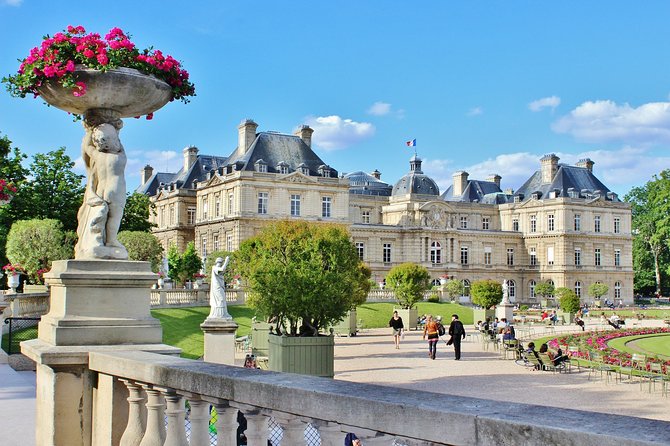
You will then reach the Grand Ducal Palace, a key piece of Luxembourgish heritage and a strong example of Renaissance architecture. Even if you only see the palace from the outside, it is a worthwhile stop because your guide explains the architecture in terms that make it usable.
Renaissance style can sound like a school term. On this walk, it becomes concrete. You will likely learn what to notice and how the palace signals status and continuity. It also helps to hear the “why” from someone who lives with these buildings in their daily life.
Again, entries are not included. If you want to spend extra time inside or attend anything that requires a ticket, you will need to plan for that separately. But even without entering, the architectural focus plus local context makes it more than a quick photo stop.
Gothic Cathedral Stop: Stained Glass and the Royal Crypt
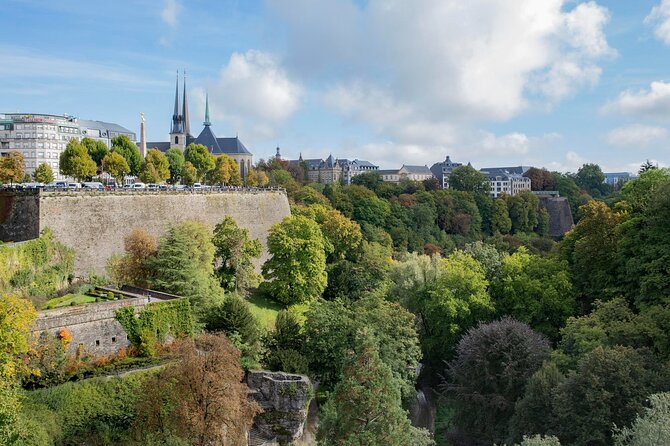
The tour finishes with a big cultural and spiritual landmark: a Gothic cathedral known for remarkable stained glass and the crypt of the royal family. The guide’s role here is useful, because Gothic architecture can be overwhelming when you are just looking at it. You need a hand telling you what matters most visually and historically.
What to expect: you will walk away with a clearer understanding of why the stained glass is treated as a signature feature, and why the royal crypt is a key part of the building’s meaning. This stop also tends to work well for people who do like churches, and for those who do not usually seek them out. The guide can help you focus on the architecture and symbolism rather than making it feel like a detour.
One useful consideration: if you have low interest in churches, it is worth saying so at the start. There is evidence that your guide can adjust the pace and the exact church-related timing based on your preference, so you do not end up feeling stuck where you least want to be.
Ending in Grund: Why the Lower City Matters
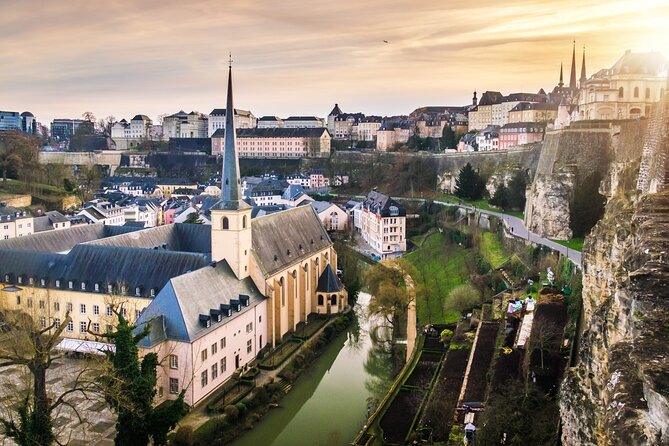
The tour ends in Grund, at the neighborhood that sits in the lower part of Luxembourg City. Grund is where the city softens from monumental landmarks into something more human scale. Finishing here is smart because you are not just leaving with a list of highlights. You are leaving with a place you can explore on your own.
Grund can be an easier area to stroll after the walk because it helps you keep the viewpoints and the Old Town in context. You can connect what you saw at the balcony and palace back to the actual streets and river-side feel.
The “walk ends here” message is true, but it is also useful. You get a guided route that sets you up to keep going, rather than ending in the middle of nowhere.
Group Size and Guide Style: Why Up to 8 Works
With a maximum of 8 travelers, you are not in a herd. You can hear your guide, and you are more likely to get personalized recommendations. That matters in a city like Luxembourg, where a great meal might be a few blocks from where you would naturally wander.
Several guides have impressed visitors for being practical, friendly, and genuinely interested in what you want to see. In particular, guides like Megan and Debbie have been praised for making the walk feel like a real conversation, not a script. Dhara has also stood out for connecting the historic story to the politics and what it takes to become a citizen, which is a great bonus if you want more than stones and windows.
The one consistent thread: the itinerary adapts to your interests and walking pace, and stops can shift with weather. That flexibility is more valuable than it sounds when your time is limited.
Price and Value: When 94.92 Makes Sense
The price is $94.92 per person for about one hour. That can sound steep if you are comparing it to a free walking tour. But this is different.
You are paying for three things that are hard to replicate on your own:
- A local guide who can explain what you are seeing and why it matters
- Small-group comfort, up to 8, so you actually get answers
- Personalized recommendations, which can save you time and money on where to eat and what to prioritize next
Where value can drop slightly is the “not included” part. Entry tickets for transport, museums, and monuments are excluded. So if you want to go fully inside multiple stops, your final cost will be higher.
My take: if you have limited time and you want a coherent hit list that actually connects, the price can be worth it. If you are staying for days and you love roaming at your own pace with no guided context, you might prefer cheaper self-guided planning.
Who This Tour Fits Best
This tour is a strong match for you if:
- You want a fast orientation and a guided route that connects upper and lower Luxembourg
- You prefer small groups and Q&A over big bus tours
- You want to cover major sights quickly without feeling like you are sprinting alone
- You like history, architecture, and city context more than deep museum time
It is not the right fit if you cannot manage walking. It also may feel less ideal if you want a lot of interior time in museums and monuments, because entry tickets are not included and the tour is time-boxed.
Tips to Get the Most From Your One-Hour Walk
- Wear shoes that handle uneven Old Town streets and stairs. Luxembourg City makes you earn your views.
- Have one or two priorities in mind, for example stained glass, fortress history, or politics.
- If you are not into churches, say it early. A good guide can steer the route toward what you care about.
- Bring a charged phone or small camera. You will likely want a photo at the balcony and from viewpoint moments.
- If you plan to enter anything substantial, budget for separate tickets ahead of time.
Should You Book This 60-Minute Local Walk?
Yes, if you are trying to make Luxembourg City click quickly. This is a practical, landmark-focused walk that connects the city’s geography to its story, and you get the extra benefit of a local guide who can tailor the pacing and recommendations to you. The small group size keeps it personal, and the route is structured so you end in Grund, not stranded after a random set of stops.
Skip it only if you dislike guided walking, need wheelchair-friendly mobility support, or you want a tour that includes multiple paid entries. If you want a quick start that helps the rest of your trip feel easier, this one-hour local experience is a smart buy.
FAQ
How long is the Luxembourg City walk?
It lasts about 1 hour.
What group size is this tour?
The maximum group size is up to 8 travelers.
Is the tour offered in English?
Yes, it is offered in English.
Where does the tour start and end?
It starts at the National Art & History Museum, Marché-aux-Poissons, 2345 Ville-Haute Luxembourg, and ends in Grund Luxembourg.
What is included in the tour price?
It includes a knowledgeable local, a small group experience, and personalized recommendations.
Are museum or monument entry tickets included?
No. Entry tickets for transportation, museums, and monuments are excluded.
What is the cancellation policy?
You can cancel for free up to 24 hours in advance for a full refund.
Is the tour suitable for guests with mobility limitations?
It is not recommended for guests with impaired mobility.